
What Is Balloon Sinuplasty?
Balloon sinuplasty is a minimally invasive procedure designed to open blocked sinus drainage pathways without removing tissue. The goal is the same as traditional sinus surgery: restoring normal sinus drainage so pressure, inflammation, and recurrent infections can improve.
Rather than cutting tissue or bone, a small balloon is guided into the natural sinus opening and gently inflated to widen the passage. Once the balloon is removed, the sinus opening remains enlarged, allowing mucus to drain more effectively.

How Balloon Sinuplasty Works
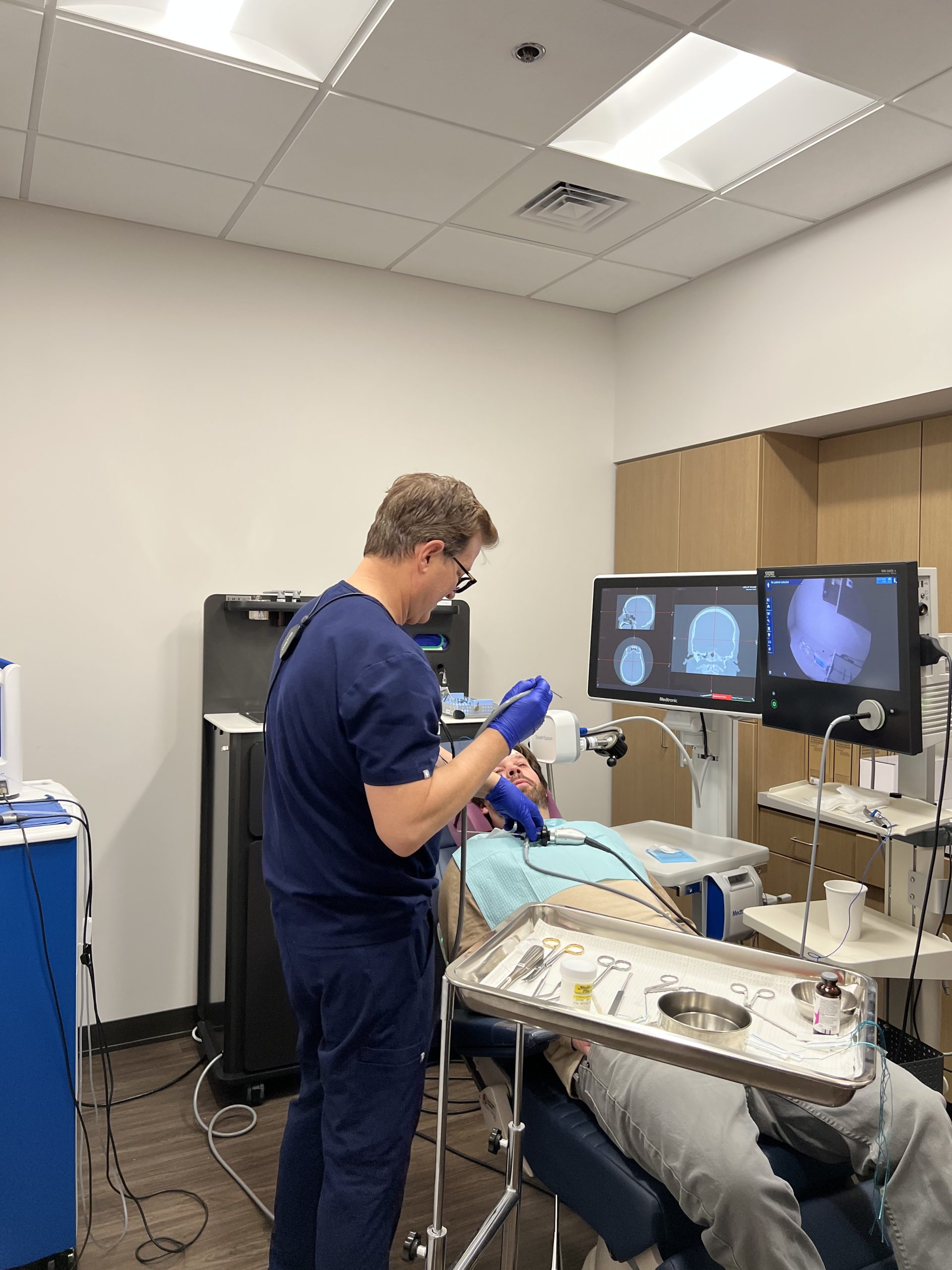
Balloon sinuplasty is performed using an endoscope and image-guided navigation technology. This allows precise access to the natural drainage pathway of each sinus.
Once the balloon is positioned correctly, it is inflated for a short period of time and then removed. No tissue is removed, and the surrounding structures are preserved. The widened opening allows improved airflow and sinus drainage moving forward.
A True In-Office Procedure
Balloon sinuplasty is performed entirely in the office and does not require general anesthesia.
Topical numbing medication is placed inside the nose, followed by targeted injections to block nerve sensation. Patients also receive medication beforehand to help them relax, allowing them to remain awake but comfortable throughout the procedure.
The balloon portion of the procedure typically takes about 10 minutes. From start to finish, most visits last approximately 30 to 45 minutes.
Balloon Sinuplasty Recovery and Sinus Balloon Aftercare
Patients go home the same day as the procedure.
For the first night or two, head elevation is recommended. Patients should avoid bending over, heavy lifting, and strenuous activity during the initial recovery period.
Some mild drainage or spotting is normal. Heavy or persistent bleeding should be reported to the office.
Sinus Doctor Follow-Up and Healing
Follow-up visits are an important part of long-term success. These visits allow gentle cleaning of the sinuses and confirmation that drainage is improving as expected.
Most patients return to work and normal activities within two to three days.
Soonus Balloon Results and Quality of Life Improvement
Many patients notice improvements in breathing and sinus pressure within the first few days after the procedure. Over time, patients often experience fewer infections, reduced facial pain, and less reliance on medications.
By improving sinus drainage, balloon sinuplasty helps reduce inflammation and allows medical therapy to work more effectively when needed.
How Balloon Sinuplasty Fits Into Long-Term Sinus Care
Balloon sinuplasty does not replace medical therapy. Medications are always tried first and often continue to play a role after the procedure.
For patients with chronic sinusitis or recurrent infections who have not responded to medical treatment alone, balloon sinuplasty becomes part of a comprehensive, long-term treatment plan focused on restoring normal sinus function.
Say Goodbye to Chronic Sinusitis with In-Office Balloon Sinuplasty at Boise ENT Sinus & Snoring Specialists
Chronic sinusitis is uncomfortable and frustrating. Boise ENT Sinus & Snoring Specialists is home to highly qualified and experienced ENT specialist Don J Beasley, MD. Our entire team is here to ensure you get the most personalized care for your sinusitis and strive to provide the very best balloon sinuplasty services. Contact Boise ENT Sinus & Snoring Specialists for a consultation to learn if balloon sinuplasty surgery is recommended for your chronic sinusitis.
We also offer balloon sinuplasty surgery for residents of surrounding communities like Nampa, and Meridian.
Is this procedure covered by insurance?
Yes. Idaho has excellent coverage for this minimally invasive procedure. Your doctor will get prior-authorization from your insurance carrier to verify your benefits. In many cases, patients can have this procedure done for as low as an office visit copay.
Does In-Office Balloon Sinuplasty hurt?
In the studies conducted using the Entellus balloon, the average pain score was 2.7. You will experience facial pressure and typically hear cracking sounds similar to and egg shell, which is normal. Should you experience pain at any time during the procedure, your doctor can adjust your anesthesia medication to maximize your comfort for a positive experience.
Will I be put to sleep?
No, general anesthesia is not administered. Patients will usually be given oral, topical and local medication as part of anesthesia protocol. You will be awake, similar to a dental procedure.
Do I need a ride to/from the office?
Yes. In most cases your doctor will prescribe an anxiolytic, such as Lorazepam, and an anti-nausea Phenergan. These are taken 1 hour before the procedure, so we recommend that you arrange transportation to/from the office and that you do not operate a vehicle during this time.
Does the balloon stay in?
No, once the balloon is in place it is dilated for a few seconds then deflated and removed. The “doorways” to your sinuses will be permanently remodeled and reshaped.
What are the most common post-op side effects?
Some patients may experience headache, nasal congestion, minimal blood/mucus drainage, and facial pain. This temporary and in most cases will resolve the day after the procedure.
How long will I miss work/school?
In most cases, patients can return to work/school the next day if not the same day. Your doctor will advise you of your limitations, if any.
How effective is the Balloon Sinus Dilation?
A recent study comparing Balloon Sinus Dilation to Functional Endoscopic Sinus Surgery (FESS) showed that patients had similar outcomes. OSBD is not inferior to FESS. Patients recover quicker and require less debridement, which means less time missed from work/school.
How long will the results last?
There is now sufficient data showing long term efficiency and indefinite results (beyond three years). Your outcome will typically depend on the severity of your sinus disease. There is very low revision rate for this procedure (less than 10%).
Is any tissue removed?
No, there is no tissue removal when dilating your sinuses. Your doctor will discuss possible removal of tissue with you only if you have structures in your nose that will make it difficult for him/her to perform the procedure.
How long will this procedure take?
Total start to finish time is typically around 1 hour. The anesthesia protocol takes longer than the procedure itself. Usually about 30-45 minutes. The actual balloon procedure takes about 10 minutes.
Will this cure my sinus disease?
No, unfortunately, there is no cure for sinus disease. For maximized results you should stay in compliance with any allergy immunotherapy, nasal steroids, etc that your doctor may have you on. This procedure will decrease your chances of a sinus infection and improve your quality of life by relieving associated symptoms, therefore making reducing infections, rounds of antibiotics and missed time from work.